
Why Inquiry-Based Learning Matters
Inquiry-based learning puts children at the centre of their own learning journey. Instead of simply receiving information, children ask questions, explore, and construct understanding through hands-on experience.

The IB Approach
The International Baccalaureate Primary Years Programme (PYP) is one of the most rigorously designed inquiry-based curricula in the world — and its architecture makes clear that inquiry is not a teaching strategy bolted onto a traditional framework. It is the framework.
At the heart of the PYP are six transdisciplinary themes that provide the conceptual lenses through which all learning is organised:
Who We Are
An inquiry into the nature of the self, beliefs, and personal wellbeing.
Where We Are in Place and Time
An exploration of history, geography, and our relationship to the world.
How We Express Ourselves
A study of creativity, communication, and the arts.
How the World Works
An investigation of the natural world and scientific principles.
How We Organise Ourselves
An examination of human systems, structures, and communities.
Sharing the Planet
A focus on rights, responsibilities, and sustainable futures.
These themes are deliberately transdisciplinary — meaning they cut across subject boundaries. A unit exploring How the World Works might weave together science, mathematics, language, and ethics simultaneously, rather than siloing them into separate lessons. This mirrors the way problems actually present themselves in the real world.
Underpinning all of this is the IB Learner Profile — a set of ten attributes that describe the kind of person the programme aims to develop: inquirers, thinkers, communicators, risk-takers, knowledgeable, principled, caring, open-minded, balanced, and reflective. These are not aspirational posters on a wall. They are actively woven into learning experiences, assessed through reflection, and returned to across every year of the programme. Children are explicitly invited to consider which attributes they are drawing on and developing as they learn.
What this means in practice is that inquiry is never incidental. A teacher designing a unit of inquiry will deliberately plan for the concepts children will explore (such as causation, change, or perspective), the skills they will practise, and the dispositions they will develop — all while leaving significant space for children's own questions to drive the direction of learning. The result is a curriculum that is both intentional and genuinely responsive to children.
What This Looks Like in Practice
It can be difficult to picture inquiry-based learning if your own schooling looked like rows of desks and textbook exercises. These vignettes offer a glimpse into what it actually looks and feels like.
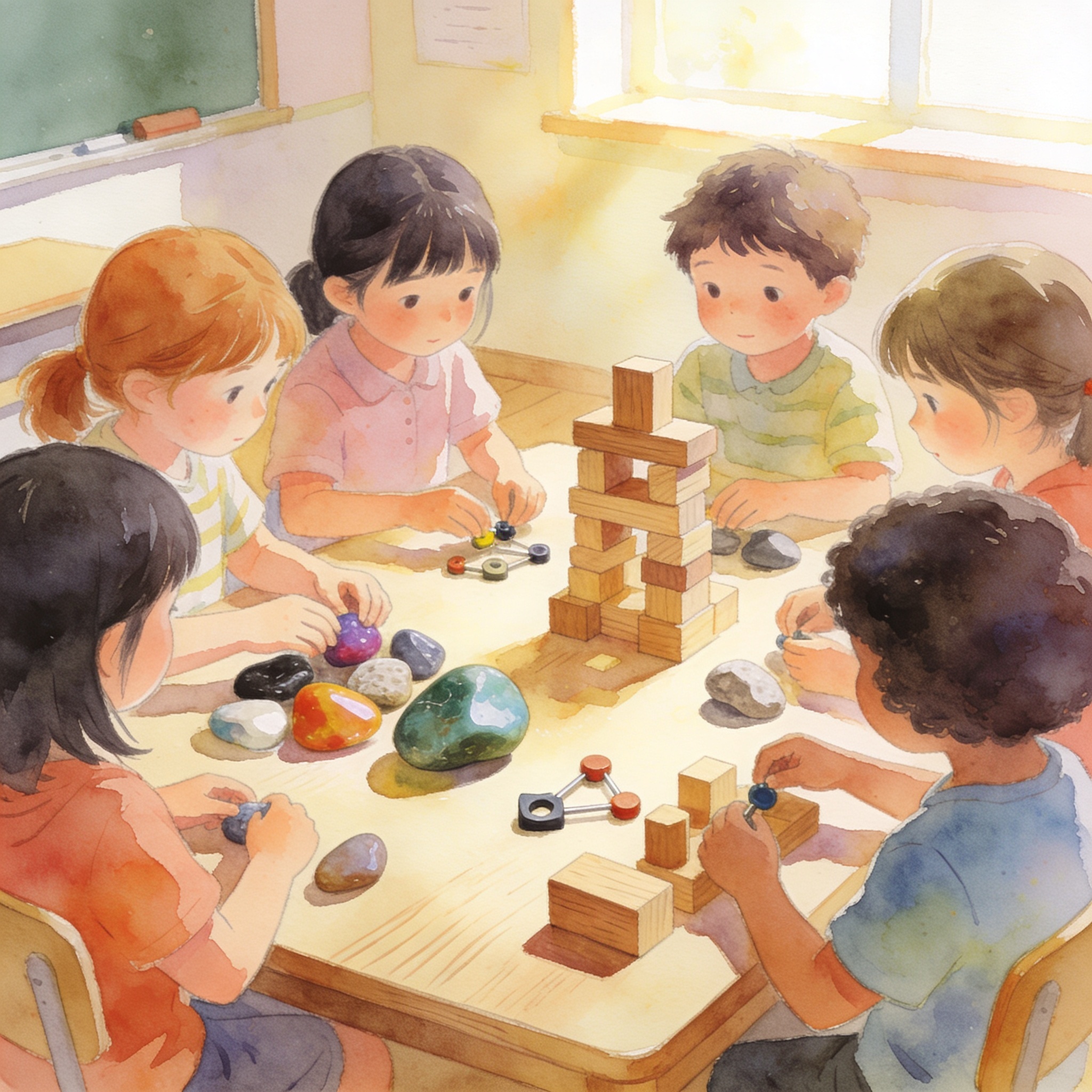
Consider a group of five-year-olds studying living things who spot a woodlouse under a plant pot. Their teacher asks, "What do you notice? What do you wonder?" The children's questions spark a week of guided research — books, microscopes, and an experiment testing whether woodlice prefer light or dark. They learn not just about woodlice, but what it means to observe carefully, form a hypothesis, and let evidence change your thinking. The woodlouse is almost incidental; the real learning is the process itself.
Or picture a class of six-year-olds whose curiosity is ignited after a classmate's hospital stay. They build a hospital ward in the dramatic play area — beds, a reception desk, hand-drawn prescription forms. Their teacher introduces vocabulary and open questions, letting the children design forms, write signs, and interview each other about symptoms. Literacy, numeracy, and empathy are all alive in the play — not as separate subjects, but as tools children reach for because they genuinely need them. The learning is indistinguishable from the living.
Further along the primary years, an eight-year-old fascinated by marine pollution channels her passion into a self-authored information book — complete with a contents page, labelled diagrams, and a chapter titled "What You Can Do." The process demands research, source evaluation, and writing for a real audience. When she presents it to the class, she speaks with the confidence of someone who genuinely knows their subject. The learning is real because the purpose is real — and that distinction matters enormously.
The Teacher's Role: Facilitator, Not Instructor
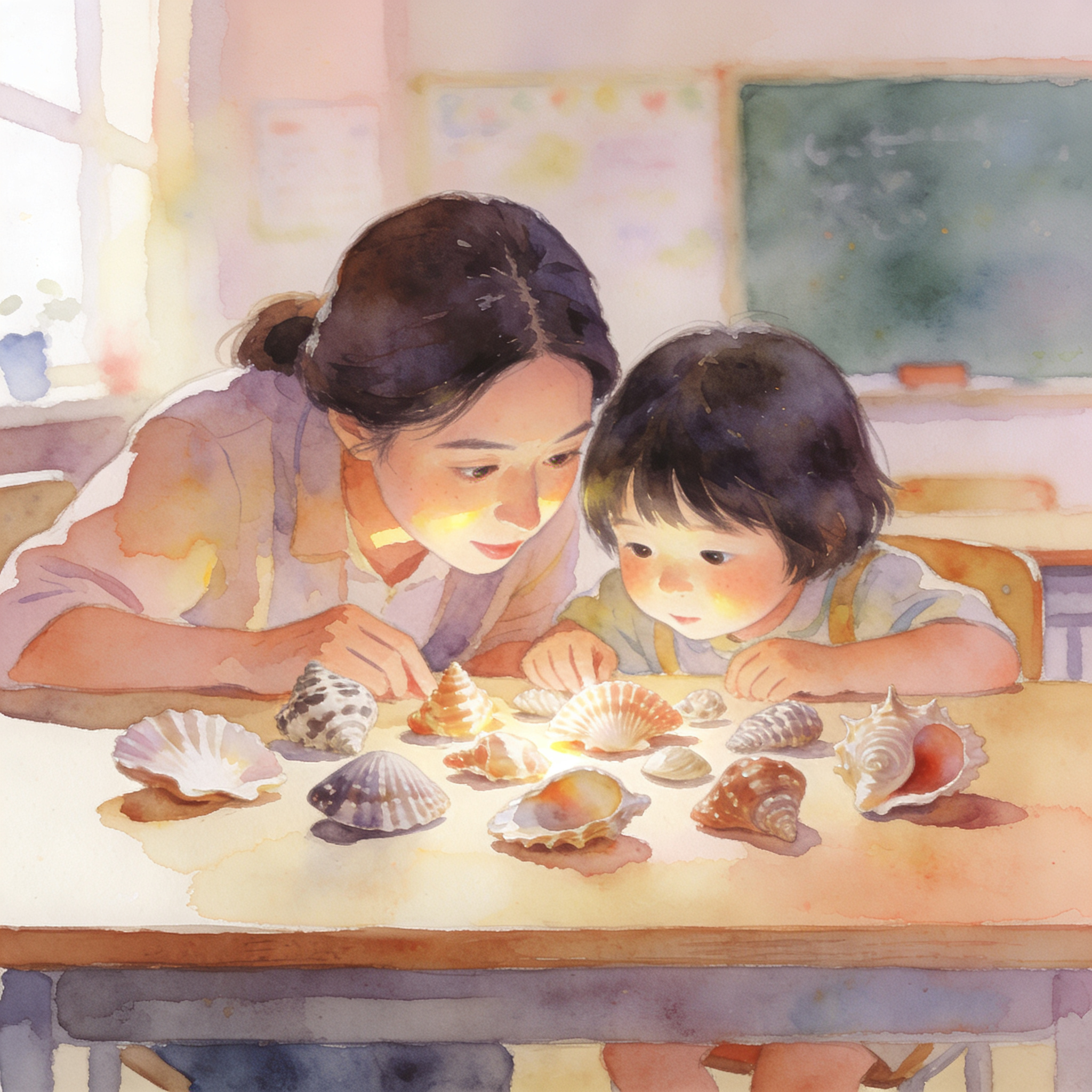
One of the most significant — and often misunderstood — aspects of inquiry-based learning is what it asks of teachers. Far from stepping back and letting children do whatever they like, an inquiry teacher is doing some of the most intellectually demanding work in education.
The shift is from instructor to co-inquirer. An inquiry teacher positions themselves alongside the child as a fellow curious person, modelling what it looks like to not-know, to wonder, and to find out. This is not a performance of ignorance — it is a genuine intellectual stance. When a teacher says "I don't know — how could we find out?" they are teaching something more valuable than any single fact: they are teaching the process of learning itself.
Questioning is a core skill. Inquiry teachers are trained to distinguish between questions that close thinking down and questions that open it up. "What is the capital of France?" has one answer. "What makes a place become an important city?" has many — and invites children to think historically, geographically, and analytically. Research on classroom talk, including the work of Robin Alexander on dialogic teaching, consistently finds that the quality of teacher questioning is one of the strongest levers for deepening children's thinking.
Assessment looks different, too. Because inquiry classrooms value process as much as product, teachers track understanding through observation, conversation, and documentation — not just written tests. A teacher might keep a journal of the questions a child asks over a week, or photograph a construction a child made to solve a problem, or record a child explaining their thinking aloud. This kind of formative assessment gives teachers a far richer picture of what a child understands than a score on a worksheet.
Crucially, none of this means that curriculum goals are abandoned. Skilled inquiry teachers hold both things simultaneously: they follow the child's curiosity and they keep in mind the conceptual understanding, skills, and knowledge the programme requires children to develop. The art of the profession lies in knowing when to step back, when to step in, and when to introduce a new provocation that nudges thinking in a more productive direction.
In IB PYP schools, teachers engage in collaborative planning of units of inquiry — mapping out the central idea, lines of inquiry, key concepts, and learner profile attributes before the unit begins, so that child-led exploration happens within a thoughtfully constructed framework.
Why It Works

The evidence base for inquiry-based learning has grown substantially over the past three decades. Cindy Hmelo-Silver's research on problem-based learning demonstrates that students who learn through inquiry develop more flexible, transferable knowledge structures than those taught through direct instruction alone. Jerome Bruner's foundational work on discovery learning showed that children construct deeper understanding when they are active participants in the knowledge-building process, not passive recipients. And OECD analyses of PISA data consistently find that students in schools emphasising creative, inquiry-oriented learning outperform peers on complex reasoning tasks — even when controlling for socioeconomic factors.
Children who learn through inquiry develop a specific and powerful constellation of skills. Critical thinking is perhaps the most foundational: inquiry requires children to form and test their own hypotheses, developing the habit of questioning assumptions. Children who regularly ask "How do we know this is true?" internalise that question as a default cognitive move — one that will serve them in every domain of life. Communication is equally central, because inquiry demands that children externalise their thinking through talk, drawing, writing, building, and presenting. Each time a child explains their reasoning, they organise ideas that might otherwise remain vague and unexamined.
When children have genuine agency over their learning, they must also develop self-management: deciding where to start, how to manage their time, when to ask for help. These are not soft skills incidental to the curriculum — they are the curriculum, practised daily in authentic contexts rather than rehearsed in isolation. And underpinning all of this are research skills. Inquiry teaches children to treat information as something to be evaluated, not simply received. They learn to seek multiple sources, notice bias, and synthesise conflicting information — skills arguably more important now than at any previous point in history, given the volume and variability of what children encounter online.
The key is that learning is driven by genuine curiosity, not by a prescribed sequence of activities. When a child is intrinsically motivated, the cognitive engagement is qualitatively different — and the research bears this out.
Addressing the Common Misconceptions
Despite the evidence, inquiry-based learning attracts persistent scepticism — often from well-meaning parents and educators who have genuine concerns. It is worth addressing these directly.
"Doesn't inquiry just mean children do whatever they want? Where's the structure?"
This is perhaps the most common misconception, and it conflates child-led with unstructured. Well-designed inquiry learning is highly structured — but the structure operates at the level of the learning environment, the teacher's questioning, and the conceptual framework, rather than at the level of dictating every step a child takes. Research by Kirschner, Sweller, and Clark (2006) raised legitimate questions about minimally guided instruction, and inquiry educators have taken those concerns seriously. Contemporary inquiry pedagogy is explicitly guided inquiry — rich in teacher input, scaffolding, and intentional design.
"What about the basics? Will my child still learn to read, write, and do maths?"
Foundational literacy and numeracy are not neglected in inquiry classrooms — they are embedded within meaningful contexts that make them more, not less, memorable. A child writing a letter to a local council about a conservation issue is practising grammar, persuasion, and audience awareness simultaneously. A child measuring the wingspan of different birds is applying fractions in a context that makes the purpose of fractions legible. Studies of IB PYP schools by Ferretti and colleagues found no deficit in foundational skills compared with traditionally taught peers, and advantages in motivation and conceptual understanding.
"Is this only for certain kinds of learners — the naturally curious or academically strong?"
The evidence points in the opposite direction. Inquiry-based approaches have been shown to be particularly beneficial for children who struggle in traditional didactic settings — including those with learning differences, children for whom the language of instruction is not their home language, and those who have experienced school as a place of failure. When children have multiple ways to demonstrate understanding and multiple entry points into a problem, the playing field levels in ways that fixed, text-heavy curricula rarely achieve.
The goal of inquiry-based learning is not to produce children who have all the answers. It is to produce children who are not afraid of the questions — and who have the tools to pursue them with rigour and confidence.
Learning for a World We Cannot Yet Imagine
There is a statistic that educators return to often: a significant proportion of the jobs that today's primary school children will hold do not yet exist. The World Economic Forum consistently identifies complex problem-solving, critical thinking, creativity, and emotional intelligence as the skills that will define professional success in the decades ahead — and these are precisely the skills that inquiry-based learning develops, day after day, in classrooms where children are trusted to think.
But the argument for inquiry-based learning is not merely utilitarian. It is also about the kind of citizens and human beings we are hoping to raise. A child who has learned to sit with uncertainty, to revise their thinking in light of new evidence, to listen to perspectives that differ from their own, and to care about questions larger than themselves — that child is better equipped not just for work, but for democracy, for community, and for a life of meaning.
The question worth sitting with — for parents, educators, and school leaders alike — is this: What kind of learning experience do we want children to remember? Not just what they knew when they left school, but what they felt capable of. What they believed about their own ability to understand the world. Whether they left school as people who ask questions, or people who wait to be told answers.
It does not prepare children for a test. It prepares them for a life.